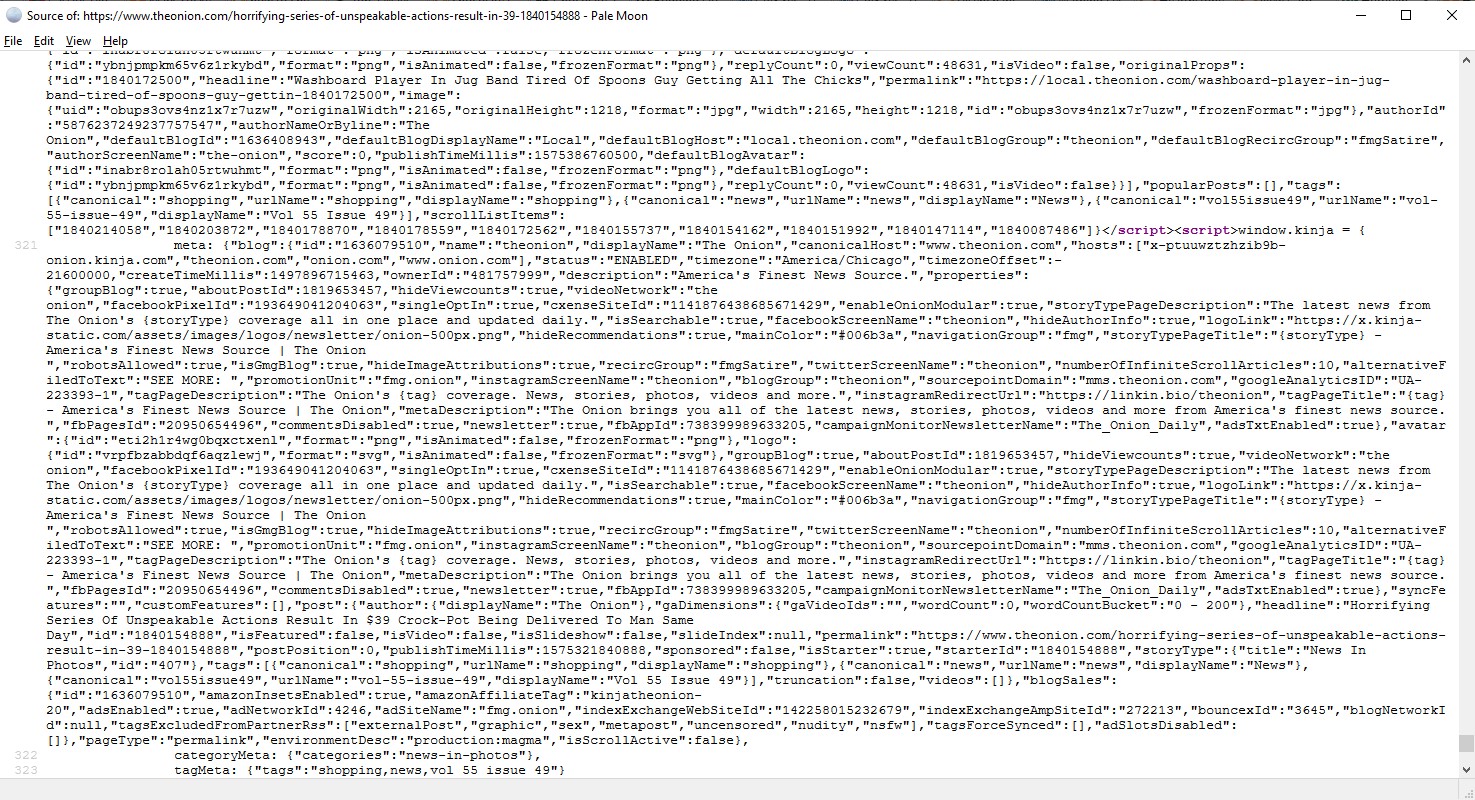
I was recently linked to a The Onion article titled "Horrifying Series Of Unspeakable Actions Result In $39 Crock-Pot Being Delivered To Man Same Day". Judging by the title, the article should jest about Amazon's abuse of its employees but I can't tell because there's no text in the article. I'm hoping this isn't some next-level joke meant to showcase how other websites hide their content behind walls of code, because that's exactly what's happening here.
All right, so The Onion bugged out for some reason, fine, I'll find a workaround. Technology bugs out all the time, so I'll take a look at the page source and simply see the content in plaint– (click the image for a 639.43 KB, 1,475x800px version).
All right, so that's just a single screen of source code, I'm sure scrolling up will finally reveal the t– (click the image for a 595.13 KB, 1,476x800px version).
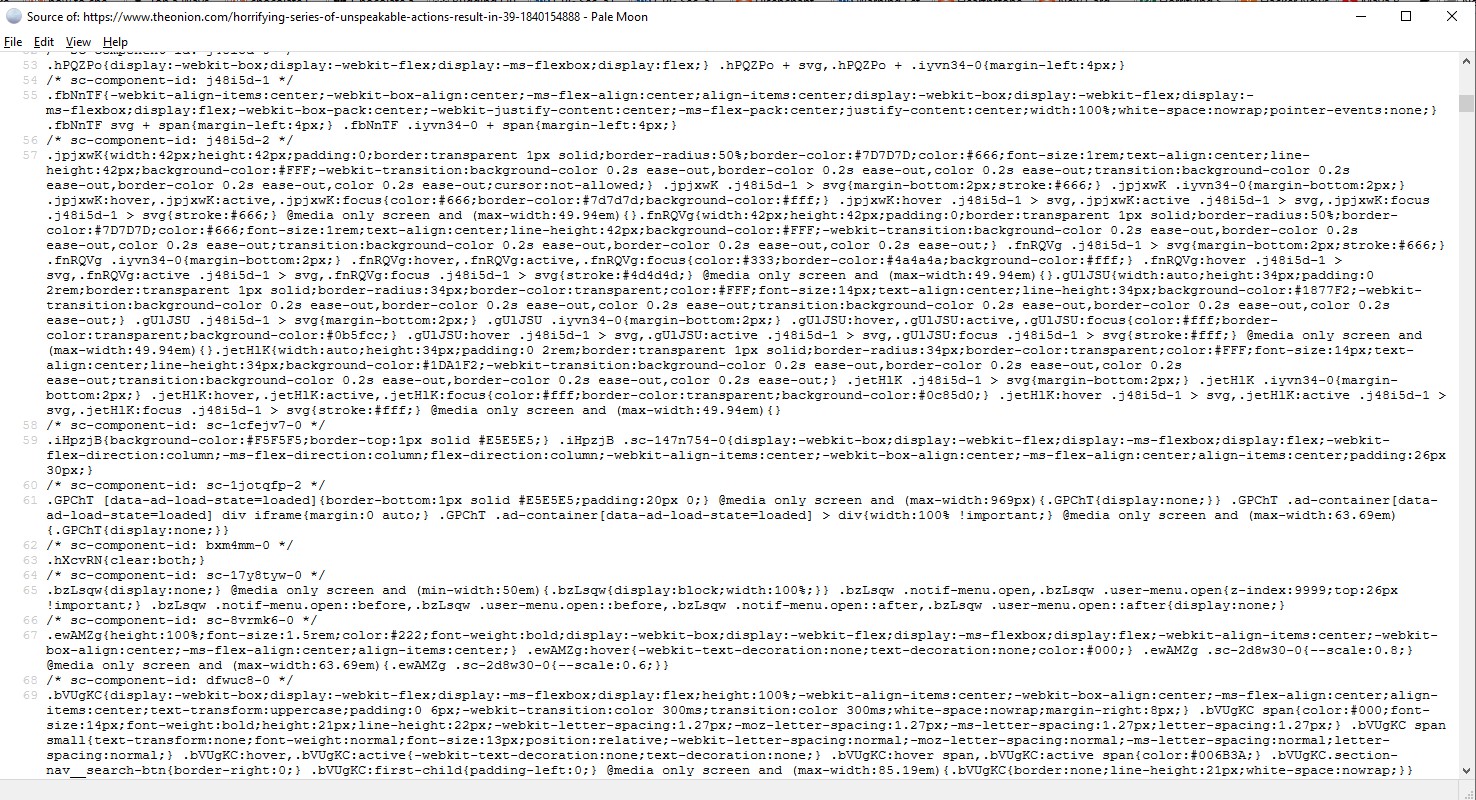
Is there any legible t– (click the image for a 476.76 KB, 1,478x803px version)
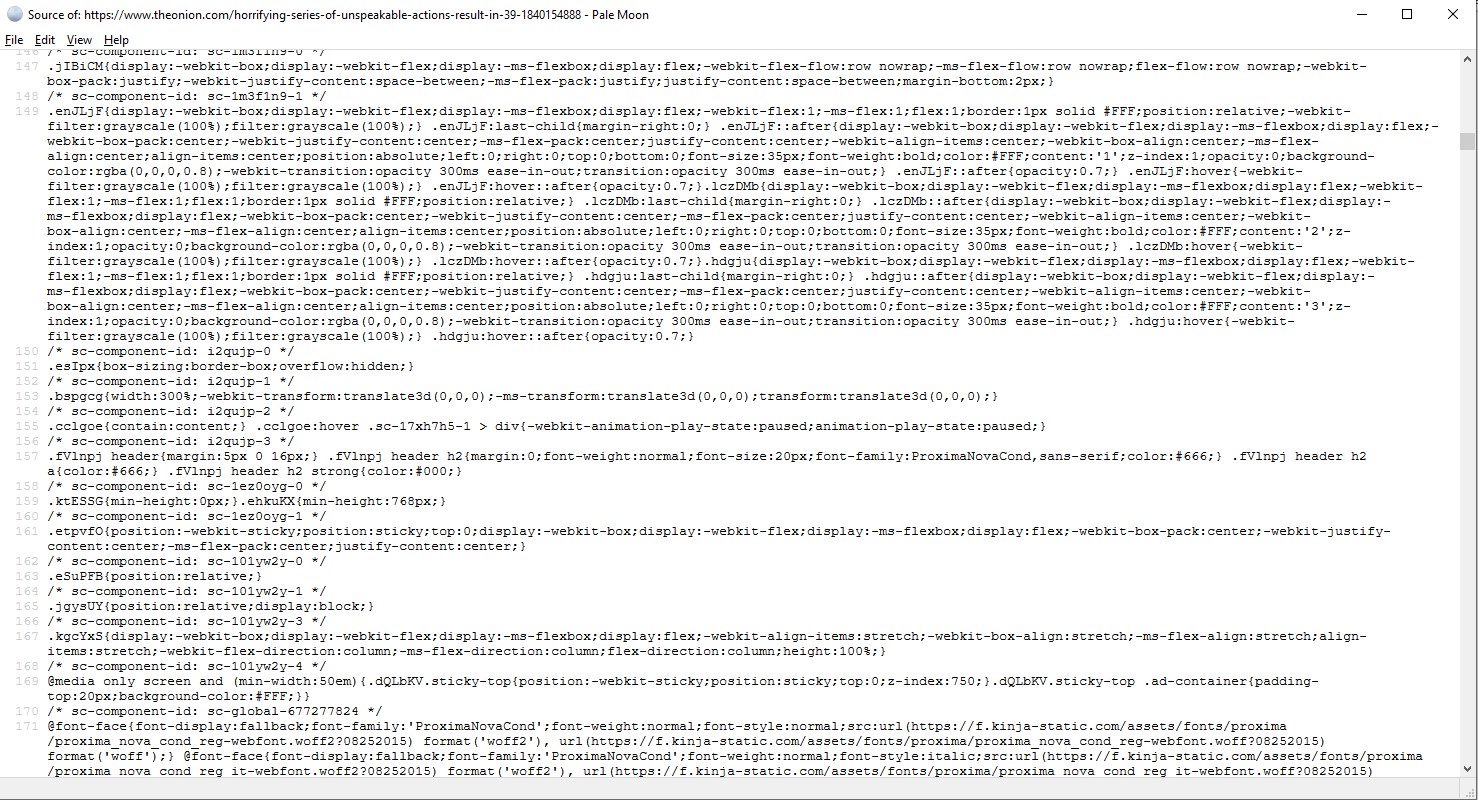
Is there anything human-readable at all inside the source code (click the image for a 676.9 KB, 1,476x803px version)?
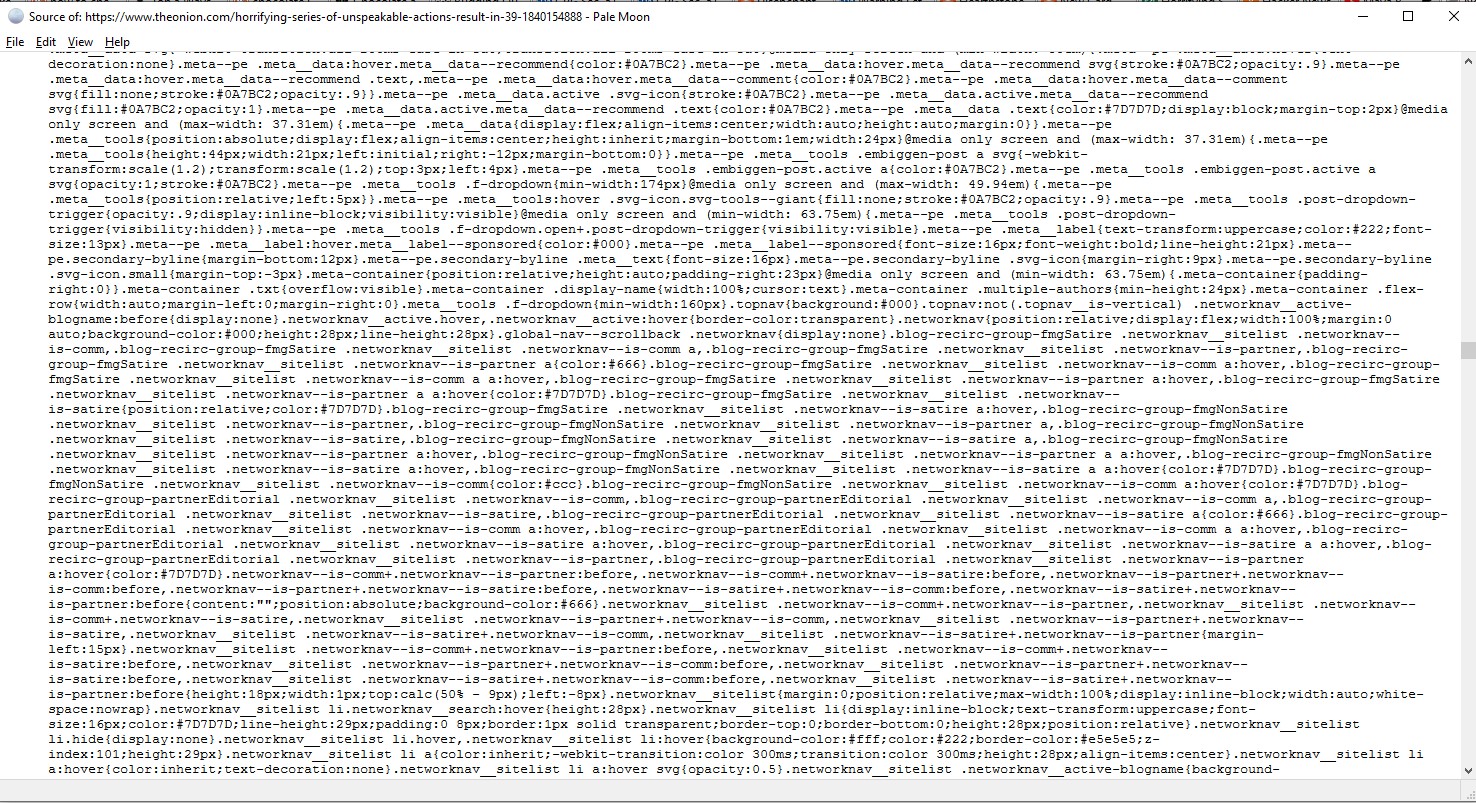
OK, so I'm using Palemoon, a Firefox fork, maybe that's the cause. Let's try something more flamboyant, such as Microsoft Edge and try to access the page (click the image for a 160.01 KB, 869x835px version)

Nope, the story is still blank, except the leading image. How about Firefox?

In this instance, it seems the obfuscation was unintentional but I've seen content publishers who intentionally obfuscate content to make web scraping more difficult. If you do that, you're making your life difficult because now you have to maintain the code wall so it's accessible by users as time goes on. Regardless of how much effort you're willing to invest in maintaining your content, you can't possibly expect your visitors to exert the same amount of effort to read your content.